
Ground Up Construction Financing: A Guide
What Ground Up Construction Financing Is and How It Differs from Traditional Loans
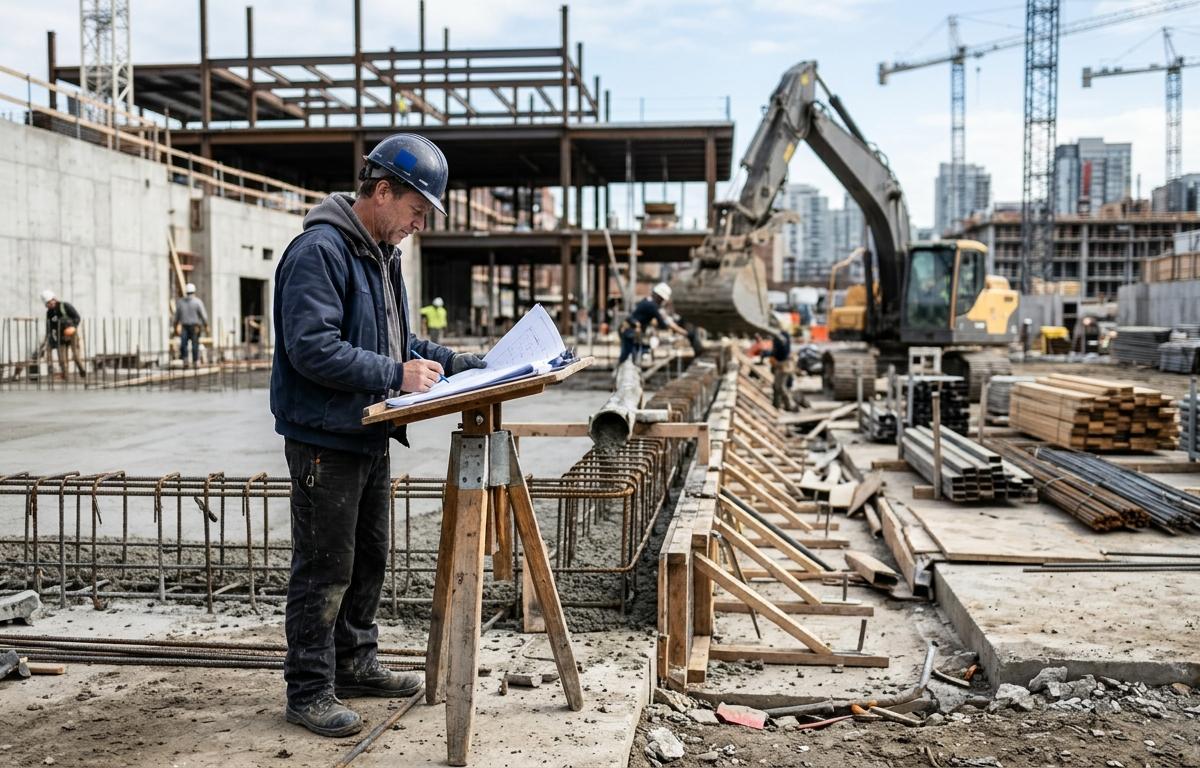
Ground up construction financing is a short-term loan that pays for a new building on vacant land. A conventional mortgage finances a structure that already stands. A ground-up loan finances something that doesn’t exist yet, and that changes how the lender evaluates the deal, structures the loan and releases the money.
The Consumer Financial Protection Bureau describes a construction loan as a short-term loan that covers the cost of building or rehabilitating a home. It ends one of two ways: a lump-sum payoff or conversion to a conventional mortgage. For investors and builders, the short horizon is the whole point. Dominion Financial notes that ground-up loans are short-term by design, typically 12 to 24 months, and some lenders offer extensions when a project runs long.
Four things set these loans apart from a traditional mortgage:
- Collateral: On day one there is no finished asset to secure the loan, so lenders underwrite the plans, budget, permits and projected completed value.
- Funding: Money comes out in stages as work is completed, not in one lump sum at closing.
- Interest: You pay interest only on the funds actually drawn, not the full commitment, so carrying costs start small and grow as the build advances.
- Borrower scrutiny: Lenders look at your construction experience and your financial capacity to finish, not just credit and income.
Investors often ask whether a pre-sale contract is required. Generally, it isn’t. Spec builds can be financed without a buyer lined up, though lenders will press on local demand, comparable sales and your track record. Because the project’s merits carry so much weight, rather than only your personal financials, ground up construction financing suits developers who think in deals, not paychecks.
How Draws, Inspections and Interest-Only Payments Work
The draw process is the mechanical heart of ground up construction financing. Understand it, and you avoid most mid-build cash-flow surprises.
Instead of handing you the full loan at closing, the lender releases funds against a draw schedule tied to completed milestones. Before each release, an inspector confirms the work is actually done. Single-family ground-up loans typically run four to six draws, though some guides describe as many as eight depending on the project and lender. A representative schedule might release roughly 15% at foundation, 30% at framing, 12% at dry-in, 18% at mechanical, electrical and plumbing rough-in, 18% at interior finishes and 7% at final completion and certificate of occupancy. Your percentages will differ, but the logic holds: money follows verified progress.
A draw cycle runs like this. Your contractor finishes a phase, you submit a draw request with supporting documentation, the lender’s inspector verifies the work, and funds go out. Lenders commonly cite 3 to 10 business days for that turnaround, but speed varies by lender, so get a written commitment before you close. Gaps between draws are where builders get hurt, because subcontractors and suppliers still expect to be paid on time.
Since interest accrues only on drawn funds, your early monthly cost is modest. If only the foundation draw has been funded, you’re paying interest on that slice, not on the whole commitment. Many lenders also build an interest reserve into the loan, so carrying costs come out of loan proceeds during construction and your own cash stays free for overruns.
Which brings up overruns. Plan for them. Contingency commonly runs about 3% to 10% of construction costs, with the higher end suited to uncertain scope. A line-item budget, contractor bids and a schedule of values reassure the lender, and they protect you too, because they force realism before anyone breaks ground. For a wider look at how funding structures compare, see our guide to real estate investor financing.
Leverage, Equity and Borrower Requirements Compared
Investors usually want two numbers first: how much will the lender fund, and how much of my own capital do I need? The honest answer is that it varies widely, and published figures come from lenders, not independent data.
On leverage, conventional banks typically cap loan-to-cost around 70% to 75%. Direct lenders report higher figures for experienced builders, commonly 85% to 90% of total project cost, and some programs advertise up to 95% of cost while capping the loan at 75% of completed value. The two limits work together. Even with generous cost leverage, the loan can’t exceed a set share of finished value, so a project priced well above its comparables will struggle no matter how experienced you are.
Equity requirements pull the other way. Some guides say most ground-up lenders want a 20% to 35% equity contribution toward total project cost. The two claims aren’t really in conflict. They describe different lender types and borrower profiles. A first-time builder with a thin track record should expect to bring more equity than a seasoned developer with several completed projects.
Experience is the clearest dividing line. One direct lender asks for at least one ground-up project in the past 36 months. Another asks for three new builds, or two new builds plus one major renovation valued over $200,000. If you lack that history, partnering with an experienced general contractor or developer can strengthen an application.
Credit standards are inconsistent across the market. Some alternative lenders will consider scores in the 600 to 620 range for strong projects, while others cite 650 or 680 as a floor. Treat credit as lender-dependent and verify before you spend time on an application.
Rates vary too. One guide places construction rates 1 to 2 percentage points above conventional mortgages, in the 7.75% to 8.75% range, while another cites 8% to 13% depending on lender and borrower profile. Use these as ranges for benchmarking quotes, not as promises.
Finally, documentation. Every lender will want plans, permits, a detailed budget and contractor bids. Some programs reduce personal-financial paperwork, such as tax returns or pay stubs, but project documentation is never optional.
Choosing a Lender: Bank Loans vs. Direct Lenders
The right lender depends on your experience, your timeline and how much leverage the deal needs. Neither option is better across the board.
Traditional banks suit borrowers with strong credit, deep equity and no rush. Their standout trait is usually lower pricing, but it comes with tighter leverage (typically 70% to 75% of cost), slower underwriting and a more conservative view of borrower experience. If you have capital to spare and a long runway, the cheaper rate can win out.
Direct construction lenders suit investors and builders who value speed and flexibility. Their standout trait is higher leverage, often 85% to 90% of cost for experienced borrowers, along with underwriting that centers on the project itself. The trade-off is generally a higher rate. When your return depends on starting before a window closes, or when preserving your own cash lets you run several projects at once, that premium can be worth paying.
A few practical points sharpen the comparison:
- Speed to close: Banks often take longer to underwrite. Direct lenders typically move faster, which matters when a land contract has a deadline.
- Draw administration: Ask both types how quickly draws fund and who inspects. A cheap loan with slow draws can cost you more in contractor friction than the rate saved.
- Flexibility: Direct lenders are more likely to finance spec builds and adapt structures to the project, while banks may want pre-sales or stronger guarantors.
- Extension options: Confirm what happens if the build runs over, and what an extension costs.
Whichever route you take, collect quotes from more than one source and compare them on total cost, not just the headline rate. Origination fees, inspection fees, interest reserves and extension charges all shape your real cost. If you’re also weighing short-term bridge options around the project, our overview of bridge and short-term lending explains how those fit alongside construction financing.
Planning Your Exit: Sale, Refinance or Construction-to-Permanent
A construction loan is temporary, so lenders will ask how you plan to repay it before they fund it. Settle your exit strategy at the start, because it shapes how you structure the loan and how much time you budget.
Sell on completion. For spec builders, the exit is a sale. You pay off the loan from proceeds, and profit is whatever remains after costs. This path depends on market conditions at completion, so stress-test your numbers against a slower sale. Lenders study comparable sales and local demand precisely because a soft market can turn a 12-month project into an 18-month carry. Build a cushion for marketing time, and check whether an extension option is available if the property sits.
Refinance into long-term debt. If you plan to hold the property as a rental, you’ll refinance the construction loan into permanent financing once the building is complete and stabilized. The risk is that completed value or rental income must support the new loan, so don’t assume the refinance will be automatic. Run the numbers on projected rents and debt coverage before you break ground.
Construction-to-permanent structures. Some programs combine both phases, so the short-term loan converts into a longer mortgage at completion. As the CFPB notes, a construction loan can end by converting to a conventional mortgage. The appeal is a single closing and less uncertainty about qualifying later. The trade-off is that terms get set earlier and may be less flexible than shopping the permanent loan separately.
Whichever path you choose, build in time. Delays are common, and an exit that only works if everything goes perfectly isn’t a plan. Keep contingency funds, understand your extension terms, and line up your buyer or refinance lender early.
If you’re mapping out a build and want a financing structure that fits your timeline and exit, Power Capital Direct offers fast, tailored solutions backed by one-on-one service. Reach out to discuss your project and see how the numbers can work.